April 9, 2025 · 7 min read
Why Regular Tree Trimming Matters for Alabama Homes
Pruning isn't cosmetic — it's the single best investment you can make in the long-term safety and value of your trees.
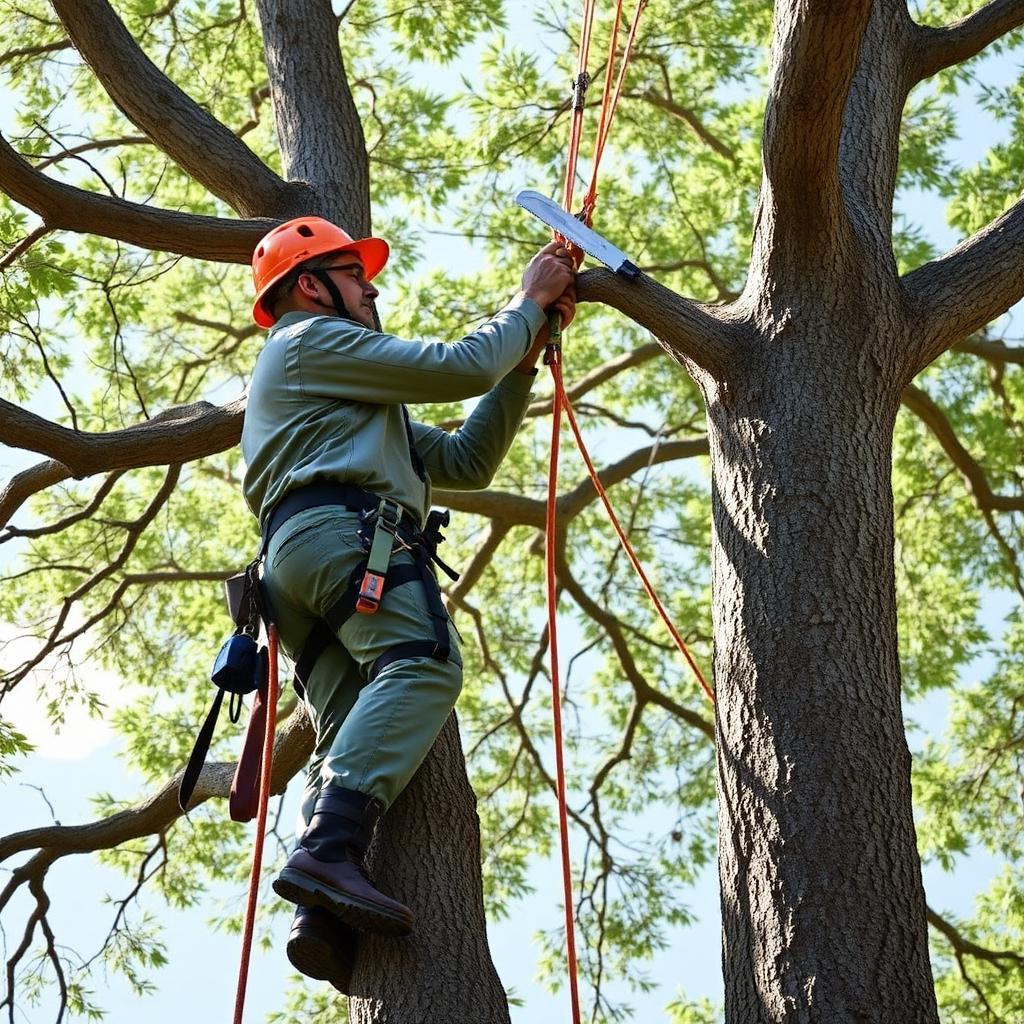
Most Alabama homeowners think of tree trimming the way they think of getting a haircut: a periodic cosmetic touch-up to keep things looking neat. That mental model costs people thousands of dollars over the lifetime of their trees, because the actual purpose of professional pruning has very little to do with appearance and almost everything to do with structure, safety, and longevity.
Trees in the forest grow tall and narrow with a single dominant leader, because they're competing with neighbors for sunlight. Trees in open yards spread wide, develop multiple competing leaders, and accumulate co-dominant stems with included bark — the structural defect responsible for the majority of catastrophic tree failures in residential settings. Without intervention in the first twenty years of life, most yard trees develop a structure that will eventually split apart in a storm.
Structural pruning early in a tree's life corrects these defects while the cuts are still small. A 1-inch corrective cut on a five-year-old oak heals in two seasons. The same correction on a thirty-year-old oak requires a 6-inch cut that takes a decade to seal and creates an entry point for decay fungi. This is why we recommend structural pruning on young trees every two or three years — it's cheap, fast, and prevents removal costs that dwarf the entire trimming budget.
On mature trees, the most important work is hazard reduction. Deadwood larger than two inches in diameter should come down before it falls on its own. Crossing and rubbing branches need to be separated before they create wounds. Limbs over roofs, driveways, and play areas need clearance pruning to keep targets out of the drop zone. We see homeowner's insurance claims after every major storm that could have been prevented with $400 of pruning.
Crown thinning — selectively removing interior branches to let wind pass through the canopy — dramatically reduces storm failure on mature trees. A dense canopy acts like a sail in a 60-mph wind, transferring enormous force to the trunk and root system. A properly thinned canopy lets wind move through, reducing leverage by as much as 30%. This is especially important for water oaks, willow oaks, and pines that are common in the Tennessee Valley.
Pruning also extends the productive life of fruit trees and ornamentals. Crepe myrtles need light annual pruning to bloom on new wood without the disfiguring 'crepe murder' so common in Alabama landscapes. Fruit trees need annual structural cuts to maintain production. Magnolias generally need very little, but occasional deadwood removal keeps them looking sharp.
What pruning is NOT: topping, hatracking, lion-tailing, or 'lifting the canopy' to expose the lawn to more sun. Topping — cutting back to stubs — is the single most damaging thing you can do to a tree. It triggers a stress response that produces fast-growing, weakly-attached watersprouts where the cuts were made, decay marches down into the trunk from every cut, and the tree becomes more dangerous than before the work was done.
Lion-tailing — stripping all the interior foliage and leaving only puffs at the branch tips — is almost as bad. It puts all the leaf mass at the ends of long levers, dramatically increases the chance of branch failure, and stresses the tree by removing the interior leaves that produce most of its sugars.
Good pruning follows ANSI A300 standards, never removes more than 25% of live canopy in one visit, makes cuts at the branch collar (not flush to the trunk), and is performed with hand tools and small saws — not with the bucket-and-chainsaw 'cut everything you can reach' approach. If your last tree company left big stubs, made flush cuts that wounded the trunk, or removed half the canopy in one visit, you got butchered.
How often should you prune? For most mature North Alabama hardwoods, a real structural and hazard prune every three to five years is sufficient. Young trees benefit from lighter work every two to three years. Fruit trees and crepe myrtles are annual. Pines rarely need anything beyond hazard limb removal. Storm-prone properties may want a wind-pruning pass every two years.
If you've never had your trees professionally evaluated, schedule a walk-through. We'll tell you what needs work, what can wait, and — honestly — what trees are beyond saving and should be removed before they fail. Call Huntsville Elite Tree Service at (256) 555-0184 to schedule a free property walk.