March 12, 2025 · 7 min read
How to Know When a Tree Needs to Be Removed in Huntsville
Six clear warning signs that a tree on your Huntsville property has crossed the line from valuable asset to dangerous liability.
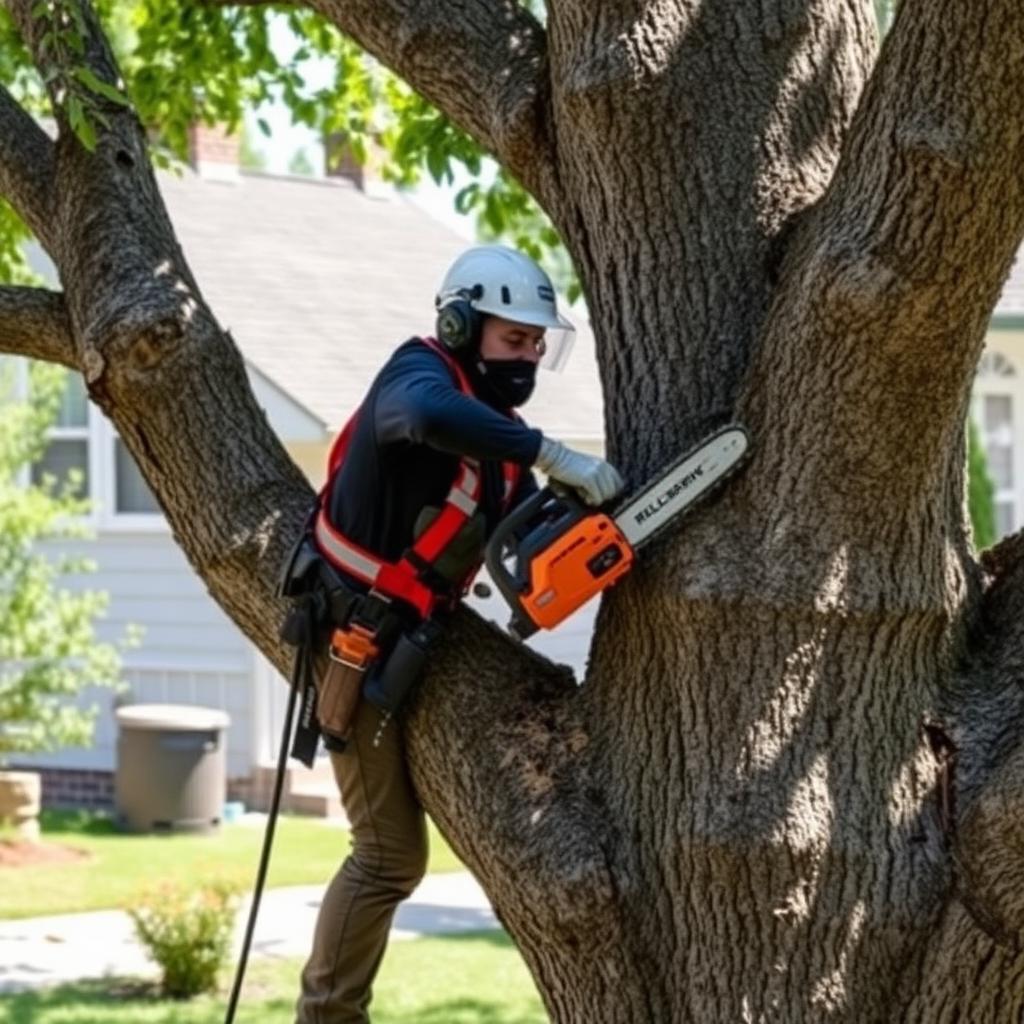
Every Huntsville homeowner eventually faces the same hard question: is that big tree out back still an asset, or has it become a liability waiting to drop on the roof? Mature trees add tens of thousands of dollars to property value, cool homes by up to ten degrees in summer, and define the character of neighborhoods like Five Points and Blossomwood. Cutting one down is permanent. But waiting too long to remove a failing tree is far more expensive — both in dollars and, occasionally, in lives.
After two decades of tree work across Madison County, we've found that the trees that fall on houses almost always showed warning signs months — sometimes years — before they came down. The problem isn't that the signs are subtle. The problem is that most homeowners don't know what to look for, and many tree companies aren't honest enough to tell them. Here are the six signs we look for on every assessment.
Sign one: a significant lean that has changed recently. Many trees lean naturally and have done so for decades without issue. The trees that come down are the ones that started leaning more in the last year or two. Look at the base — if you see exposed roots on the side opposite the lean, or a crack in the soil, the root plate is failing. That tree is on borrowed time.
Sign two: large dead limbs in the upper canopy. A few dead twigs are normal. But when you see dead branches three inches in diameter or larger in the top third of the tree, the tree is in decline. Those limbs will come down in the next storm, and once a tree starts losing its crown from the top, recovery is rare.
Sign three: mushrooms or conks at the base. Fungal fruiting bodies — especially Ganoderma, Armillaria, and Inonotus — at the root flare or on the lower trunk mean active decay inside the wood. By the time you see a mushroom, the fungus has usually been working for years. A trained arborist can sometimes drill-test the trunk to measure remaining sound wood, but the verdict is almost always the same: the tree is structurally compromised.
Sign four: a hollow or cavity in the trunk. A small cavity isn't always fatal — trees can live for decades with one — but anything larger than about a third of the trunk's diameter is serious. Hollow trunks fail in compression during high winds, and once they go, they go suddenly. We see this most often on old water oaks and silver maples in older Huntsville neighborhoods.
Sign five: cracks in the main trunk or major scaffold limbs. Vertical cracks that run more than a few feet, or horizontal cracks of any length, indicate structural failure in progress. The most dangerous are co-dominant stems with included bark — two trunks that grew up together with a tight V-shaped crotch that traps bark inside. These fail catastrophically, often splitting the tree in half during a single storm.
Sign six: location matters as much as condition. A perfectly healthy oak twenty feet from your house with major limbs overhanging the roof is a higher risk than a partially decayed tree out in the back forty. We always assess targets first — what would the tree hit if it failed? — before we assess the tree's condition. A tree with a 5% failure risk over your bedroom is more urgent than a 50% failure risk over an empty pasture.
There's also the question of pests. Emerald ash borer has now been confirmed in Madison County, and every untreated ash tree in the area will be dead within a few years. Pine bark beetles can take a healthy loblolly from green to brown in six weeks. Hypoxylon canker on drought-stressed oaks is essentially a death sentence. If you're seeing thinning canopy, yellow needles, or bark peeling in sheets, get an arborist out before that tree becomes a hazard.
Finally, age and species matter. Bradford pears almost always fail by year twenty — the included bark in their crotches guarantees it. Silver maples and willows are notoriously brittle. Water oaks rarely make it past seventy in urban settings. If you have one of these species past its expected service life, plan removal proactively rather than reactively. Removing a tree on your schedule is a fraction of the cost of removing one after it's on your roof — and your insurance company will thank you.
If you're not sure about a tree on your Huntsville property, get a real assessment. We offer free, no-pressure evaluations and will tell you honestly when a tree can stay, when it needs work, and when it's time to come down. Call us at (256) 555-0184 to schedule.