May 7, 2025 · 7 min read
How to Choose a Tree Service Company in Huntsville
Seven questions that will separate the real professionals from the guys who'll wreck your yard — or worse.
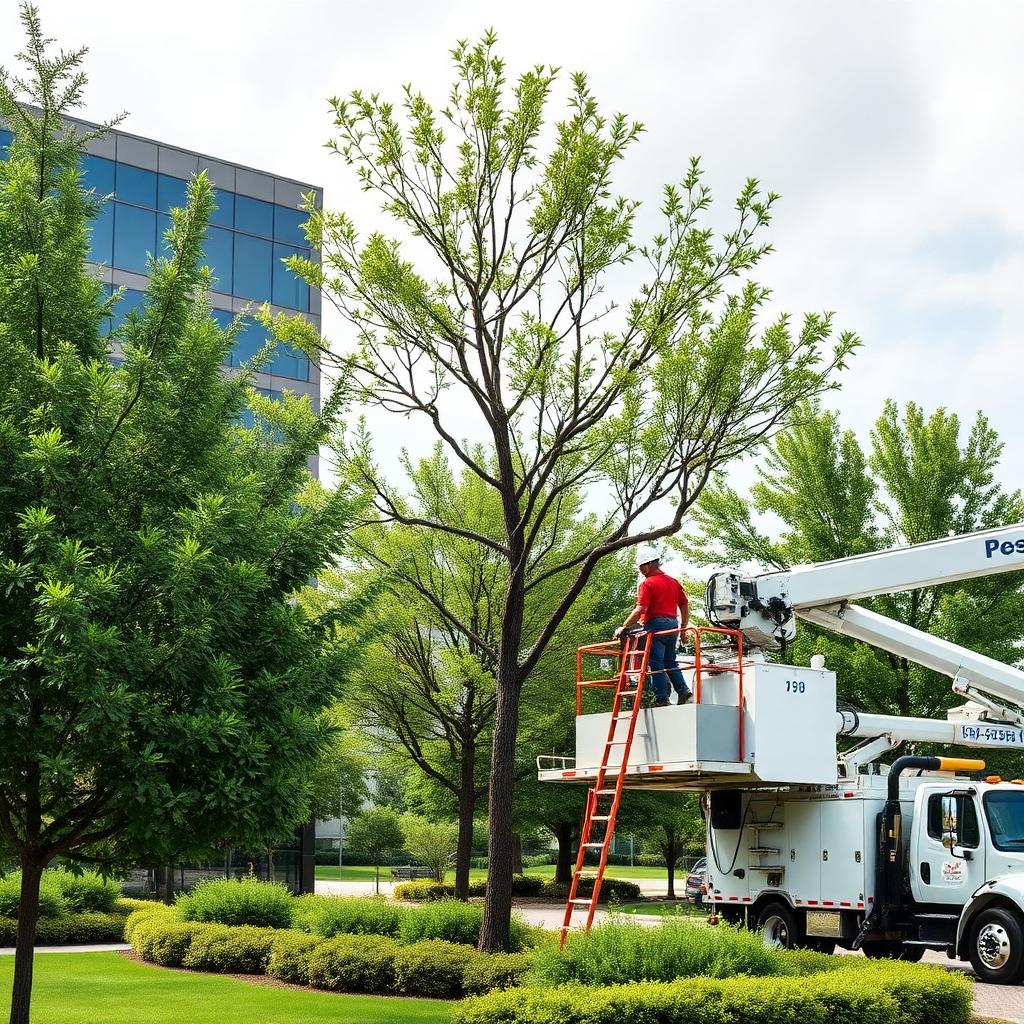
Tree service is one of the most dangerous trades in America, regularly ranking in the top five for workplace fatalities. It's also a trade with essentially zero state-level licensing in Alabama — anyone can buy a chainsaw and a magnetic truck sign and call themselves a tree company tomorrow. Homeowners hire on price, get burned, and conclude that 'all tree guys are the same.' They're not. Here are seven questions that separate the real outfits from the rest.
Question one: can you send me a current certificate of insurance directly from your agent? A real tree company carries general liability ($1 million minimum, often $2 million) and workers' compensation on every employee. They will be happy to have their insurance agent email the certificate to you directly — the certificate naming you as the certificate holder. If they hand you a photocopy or hedge on the workers' comp question, walk away. You as the property owner can be sued if an uninsured worker is injured on your job.
Question two: is anyone on your crew an ISA Certified Arborist? The International Society of Arboriculture is the recognized professional credential in our industry. Certified arborists have passed a comprehensive exam, maintain continuing education, and adhere to a code of ethics. Not every climber needs to be certified, but a real company has at least one credentialed arborist on staff and uses them for assessments and complex jobs.
Question three: can you provide a written, itemized estimate? Verbal quotes and 'about $X' answers are how the bait-and-switch starts. A real estimate spells out the work scope (which trees, what work on each), pricing, debris disposal, stump grinding (or not), and any limitations. It's signed by both parties before work starts. Anything else opens the door to surprise charges.
Question four: who will actually be doing the work, and what's their experience? Some companies sell jobs and then sub them out to whoever's available. A real company has its own crew with known experience levels. Ask whether the climber is full-time, how long they've been climbing, and whether the same crew that quoted the job will be doing it.
Question five: what's your approach to this specific tree? A good tree company will walk you through their plan — how they'll access the tree, whether they'll climb or use a bucket truck, what rigging they'll use for limbs over the house, whether they need a crane. If the answer is vague or 'don't worry about it,' worry about it. Detailed thinking about the specific job is the mark of a professional.
Question six: do you top trees or hat-rack them? The correct answer is 'no, never.' Topping (cutting back to stubs) and hat-racking (removing the entire crown above a certain height) are universally condemned by every arboriculture organization. They kill trees over five to ten years. Any company that lists 'tree topping' as a service is telling you they don't know what they're doing, or they don't care.
Question seven: can you give me three references in my area from the last six months? Recent local references are easy for real companies to provide. Drive by the addresses if you can — see what the finished work looks like, both the tree and the yard cleanup. Call the references and ask: was the price what you were quoted? Was the cleanup thorough? Would you hire them again?
A few red flags that should end the conversation immediately: door-to-door solicitation after a storm ('we noticed your trees and happen to be in the neighborhood'), demands for full payment upfront, dramatically lower quotes than every other bidder, no permanent local address or business phone (cell phones only), aggressive pressure to sign on the spot. Each one of these correlates with serious problems — bad work, no insurance, disappearing after partial work, or outright theft.
A few green flags: established local address you can find on Google Maps, online reviews going back multiple years (not just a flood of five-stars from the last two months), willingness to wait a few days for you to compare quotes, photos of completed work on their own website, a real office or shop address.
Price should be a tiebreaker between qualified bidders, not the primary criterion. The gap between the cheapest insured outfit and the cheapest uninsured one is typically 15 to 25 percent — and the smaller of those numbers is what you save by hiring the better company. The downside risk on the uninsured side is unlimited.
Huntsville Elite Tree Service checks every one of these boxes. We're locally owned, ISA-certified, fully insured, and happy to send credentials before we ever walk a property. Call us at (256) 555-0184 to get on the schedule for a free estimate.