April 30, 2025 · 7 min read
Emergency Tree Service: What to Do After a Storm in Huntsville
A step-by-step guide to handling storm damage from the moment you hear the all-clear to the final cleanup.
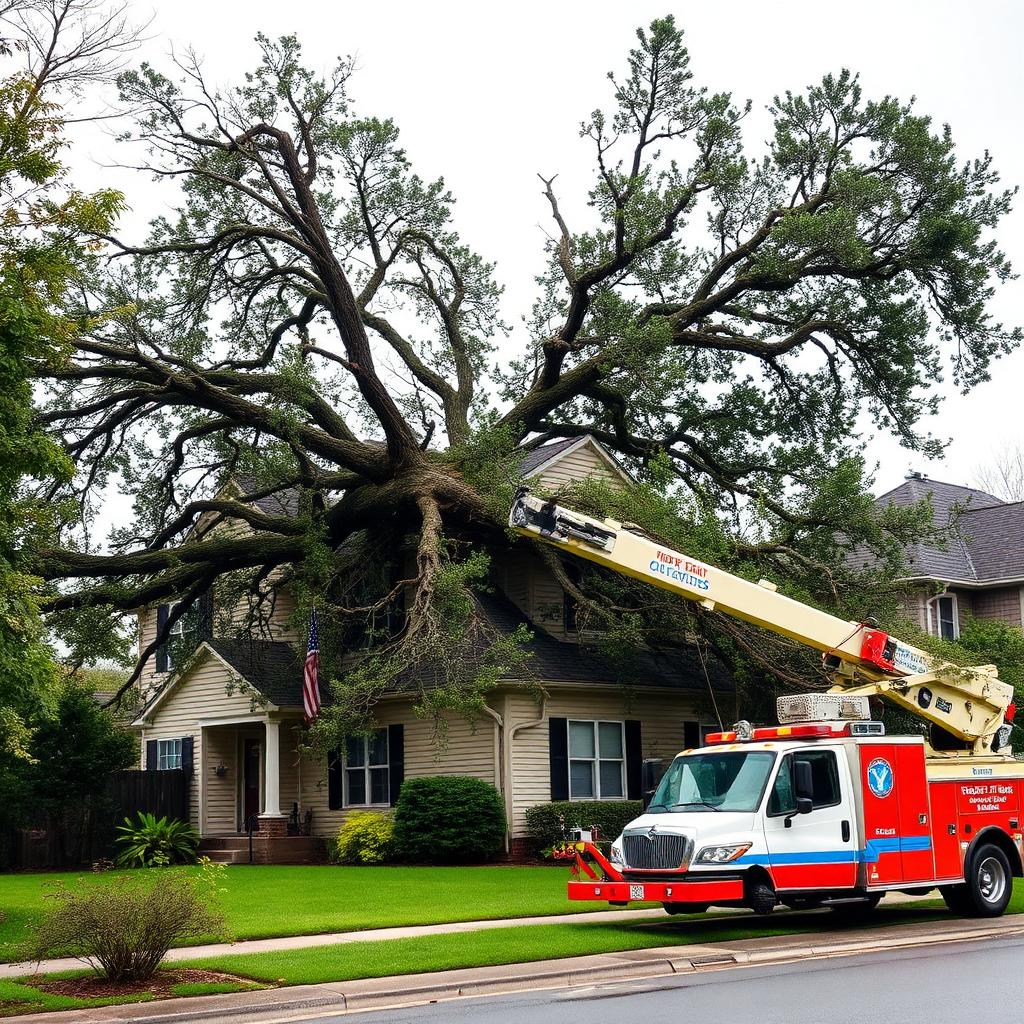
Huntsville sits at the south end of Tornado Alley's eastern extension, and we get hammered by serious storms every spring and several more times throughout the year. Knowing exactly what to do — in what order — in the first hours after a storm can make the difference between a smooth insurance recovery and a six-month nightmare. Here is the playbook we give every client.
Step one: stay inside until you are sure the storm cell has cleared. Storms in our area often have a calm middle that fools people into going outside; if the wall cloud is still coming, you want to be in the safe room. Once weather services confirm the cell has passed, then start your assessment.
Step two: walk the property looking for the four big hazards before you do anything else. Downed power lines (assume every line is live), gas smell anywhere near a fallen tree (gas line strike — leave the area and call your gas utility immediately), trees leaning on the house or with broken limbs hanging in the canopy (widow-makers that can drop without warning), and any structural damage that exposes you to falling debris.
If a tree is on a power line, do not approach. Call Huntsville Utilities (or your local co-op — Joe Wheeler, Cullman EMC, etc.) and report a tree on a line, the address, and any visible danger. They will dispatch a crew. Lines that look dead can re-energize without warning when crews are restoring service elsewhere in the grid.
Step three: document everything before you touch anything. Photograph and video the damage from multiple angles, in good light if possible. Get wide shots of the scene, close-ups of the points of impact, and shots of any contents damaged inside the structure. Time-stamped photos are insurance gold.
Step four: call your insurance company. Open a claim, get a claim number, and ask what their preferred mitigation contractor relationships are. Most carriers will let you use any licensed insured contractor; some have preferred lists. Either way, your policy almost certainly has a duty-to-mitigate clause — you are required to prevent further damage, and reasonable emergency mitigation expenses are reimbursable.
Step five: call a real tree service. After a major storm, fly-by-night operators flood Huntsville, and so do well-meaning but uninsured neighbors with chainsaws. Three non-negotiable requirements before anyone touches a tree on your property: certificate of general liability insurance (minimum $1 million) sent directly from the insurance agent, certificate of workers' compensation coverage, and a written estimate that itemizes the work.
Step six: prioritize emergency mitigation over full cleanup. The first priority is removing weight from the structure, tarping any roof penetration to keep water out, and clearing access for repair contractors. Full cleanup of yard debris can usually wait a day or two. Most homeowner policies cover emergency mitigation as a separate line item from the main repair claim.
Step seven: don't sign anything that gives a contractor 'assignment of benefits.' This is a common contract clause after storms that lets a contractor collect your insurance proceeds directly, often after they've inflated the scope of work. Sign work orders and estimates, not assignment of benefits agreements. If a contractor pressures you to sign one, that's your signal to call someone else.
Step eight: watch out for trees that didn't fall but should have. A tree that took a 40-degree lean during a storm has a damaged root plate even if it didn't go over. A tree with major limb loss may have hidden trunk cracks. We strongly recommend a post-storm walk-through with a certified arborist for any property with significant damage, even if no tree hit a structure.
Step nine: keep every receipt, invoice, and piece of correspondence. Tree work, tarping, hotel stays if you're displaced, mileage to and from repair stores — much of this is reimbursable under additional living expenses (ALE) and other policy provisions. Bring it all to your adjuster.
Step ten: when in doubt, call us first. We've handled storm response across Madison, Morgan, Limestone, and Marshall counties for years. Our 24/7 emergency number is (256) 555-0184. We'll prioritize trees on structures over yard cleanup, work directly with your insurance adjuster, and document everything for your claim.