May 28, 2025 · 7 min read
Dead Tree Removal: Why You Shouldn't Wait
A dead tree is a ticking clock. Here's exactly what happens between the day a tree dies and the day it comes down on its own.
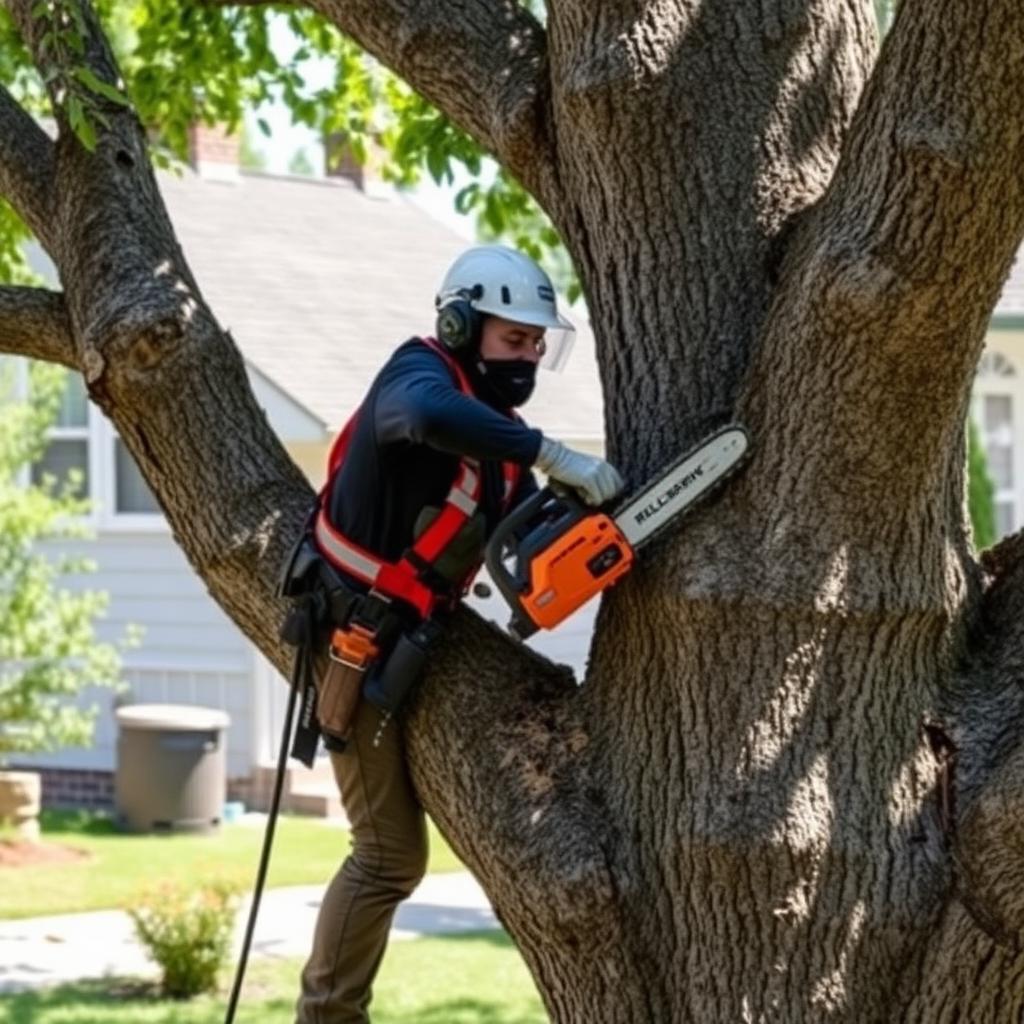
Every dead tree falls eventually. The only questions are when, in what direction, and whether anything valuable will be in the way. We've seen homeowners watch a dead pine in the back corner of the lot for years, telling themselves they'll deal with it 'next spring.' Then a Tuesday afternoon thunderstorm drops it through the roof of the detached garage, and suddenly the bill is twenty times what removal would have cost the year before.
Here's what actually happens, year by year, after a tree dies. Year one: leaves don't emerge in spring, or they emerge sparse and brown. Twigs become brittle but most of the canopy is still attached. Risk is moderate — usually limb-drop rather than whole-tree failure. Removal costs are at their normal level.
Year two: small branches start dropping in any moderate wind. The bark begins separating from the trunk in patches. Woodpeckers move in, drilling for insect larvae now colonizing the dead wood. Decay fungi establish in the trunk, often invisible from outside. Removal cost rises slightly because climbers can no longer trust the wood to hold rigging loads — more rigging from outside the tree, sometimes a bucket truck instead of climbing.
Year three: major limbs start failing. The trunk shows visible decay where bark has fallen off — soft, punky wood you can push your thumb into. Hollows form, often around large branch unions. Climbing the tree becomes too dangerous; everything has to be done by crane or bucket truck. Removal cost has typically doubled.
Years four and five: the tree is structurally compromised throughout. Major limbs fail in any significant wind. The trunk itself may start to lean as roots decay below grade. Crane removal becomes mandatory — there is no safe way to climb decayed wood. Removal cost has typically tripled or more from the day the tree died.
Beyond year five: whole-tree failure is just a question of which storm. Pines tend to snap at a weak point partway up the trunk. Hardwoods often uproot as the root plate decays, going over with all the soil still attached. Hardwoods are heavier but make less noise on the way down; pines are lighter but louder. Both ruin whatever they land on.
Pines are the fastest decay story in our region. A loblolly killed by pine beetles in July can be too dangerous to climb by the following April. The wood goes punky quickly in our humid climate, and the bark sloughs off in massive sheets. Dead pines are the most urgent removals on our schedule.
Oaks and other dense hardwoods take longer to decay but are heavier when they fail. A dead 30-inch oak that uproots can lift a 20-foot diameter root plate of dirt with it, creating both impact damage at the canopy end and a giant hole at the root end. Cleanup and restoration are dramatically more expensive than a planned removal.
Insurance angle: most homeowner policies will pay for a tree that falls on a structure, but most will NOT pay to remove a dead tree before it falls. The exception is some 'preventive removal' coverage in higher-tier policies, usually capped at $500 or less per tree. From an insurance perspective, you are paying for removal either way — either out of pocket now, or through deductibles and rate increases after a claim.
Liability angle: a known dead tree on your property that falls on a neighbor's house or car is your liability. If they can document that the tree was visibly dead and you took no action, your insurance may deny the claim and you may face personal liability for damages. This has happened in Alabama courts.
The good news: dead tree removal is usually straightforward and relatively quick. Most dead trees we remove are down within four to six hours. Cost depends on size, access, and decay level, but a typical dead pine in a North Alabama yard runs $400 to $900. A large dead oak with hazard concerns might run $1,500 to $3,000. Either way, a fraction of what failure-driven removal costs.
If you have a dead or dying tree on your Huntsville-area property, don't watch it for another season. Call Huntsville Elite Tree Service at (256) 555-0184 for a free assessment and quote. We schedule dead-tree removal as urgent work and usually have crews on site within a week of the estimate.